
Middletown City Directory Collections
Thrall Public Library is the anchor shelf for anyone working with a Middletown city directory. Its microfilm run spans 1871 through 1984. A separate 1857-1858 Middletown Directory survives as digitized page images. Those are two distinct collections. A long gap sits between them, so treat the material as separate rather than one continuous street directory. Around the directories, the library keeps newspapers, obituaries, photographs, vertical files, and genealogy material. Those holdings can confirm or challenge a listing. Before tying any person to an address, record the exact title and year. Note the reel or page too, and the role shown. Those details turn a resident lookup into evidence you can defend later.
| Collection | Years | Where Held | Access |
|---|---|---|---|
| Middletown city directories | 1871-1984 | Thrall Local History microfilm | In person; free viewing and $0.25 printing |
| Middletown Directory | 1857-1858 | Thrall digitized directory pages | Online page-image viewer |
| Selected local newspapers | 1851-present across separate titles | Thrall microfilm and library resources | In person; title and year matter |
| County historical collections | Dates vary | Orange County Historical Society, Arden | Appointment or qualified-researcher access under society terms |
Thrall's holdings page names no individual directory publisher. No criss-cross or reverse-address run appears there either. Ask the reference desk to check the title page and imprint of the reel you want, and to confirm whether that volume includes a street-order section. That small step keeps a city directory from being mistaken for an address directory.
Thrall's Middletown Historical Shelf
Thrall Local History sits at 11 Depot Street in Middletown. Its local-history desk strongly recommends an appointment. It points to city directories, genealogies, church and cemetery material, railroad and canal sources, local organizations, photos, newspapers, obituary research, and vertical files. Call ahead with a surname, a street, an approximate year, and the likely municipality. Staff can then point you to the right reel. They can also avoid treating every item labeled Middletown as a City of Middletown record. The Thrall microfilm holdings page documents the 1871-1984 city-directory run along with several newspaper titles. That page marks the collection route for any Middletown city directory search at the library.
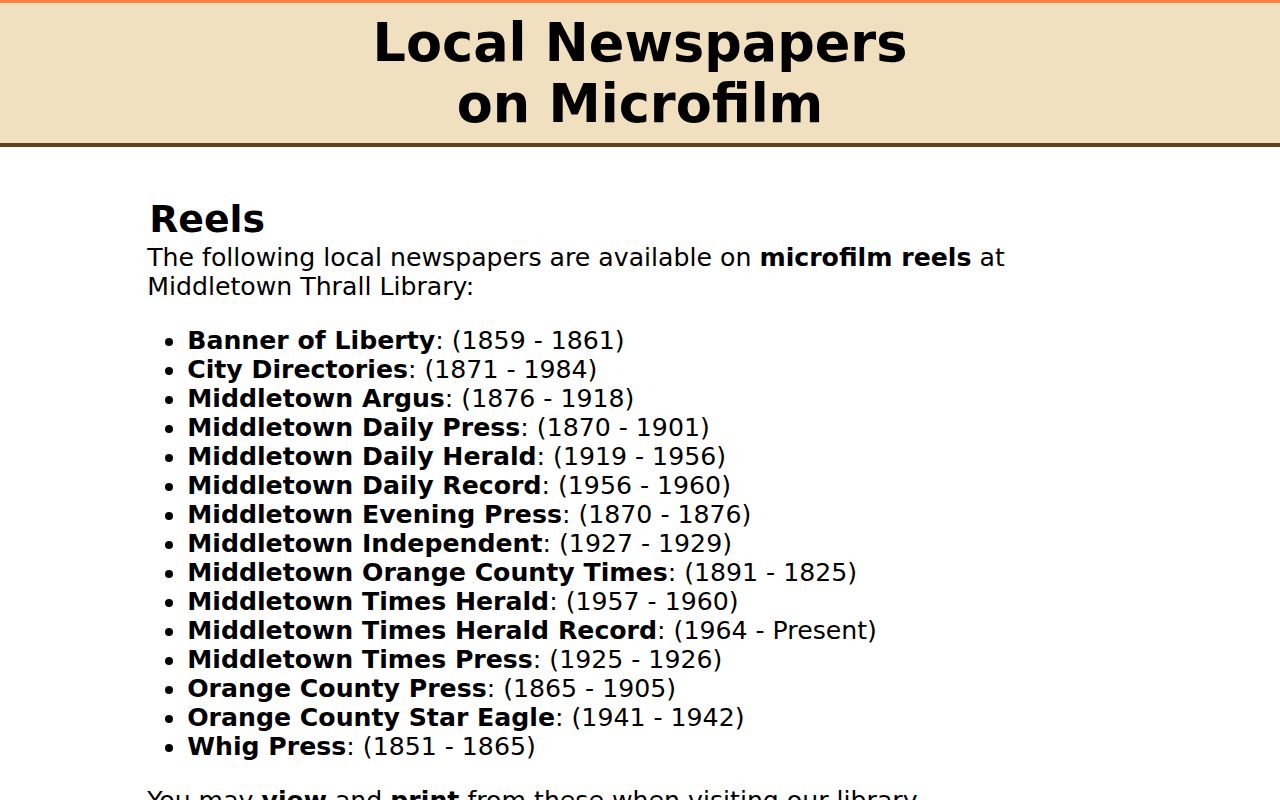
Use the holdings page as a locator. Then confirm the year and reel with staff before relying on a listing. Viewing is free. Printed pages run $0.25 each. Keeping a page-level citation with your notes costs very little. Thrall's serial and special collections add depth when a name appears only once. The library holds Orange County genealogy material, railroad and church records, cemetery files, local newspapers, and the Elizabeth Stivers Mills collection. These are archival leads. They are not a license to merge unrelated people who share a surname. Note: Save the collection title, directory year, reel or page, and staff guidance. The same result can then be checked again.
Middletown City Directory Page Images
The digitized Middletown Directory covers 1857-1858 and was digitized by Thrall in 1999. Its landing page describes a village reference and business-advertising document, browsed as numbered HTML pages with page images. It is a valuable early snapshot. Yet it proves nothing about every resident or street being included. The stretch between this volume and the confirmed 1871 microfilm run remains an open research question for anyone tracing past residents of Middletown. Thrall's first digitized directory page shows the page-image style used for the 1857-1858 collection.
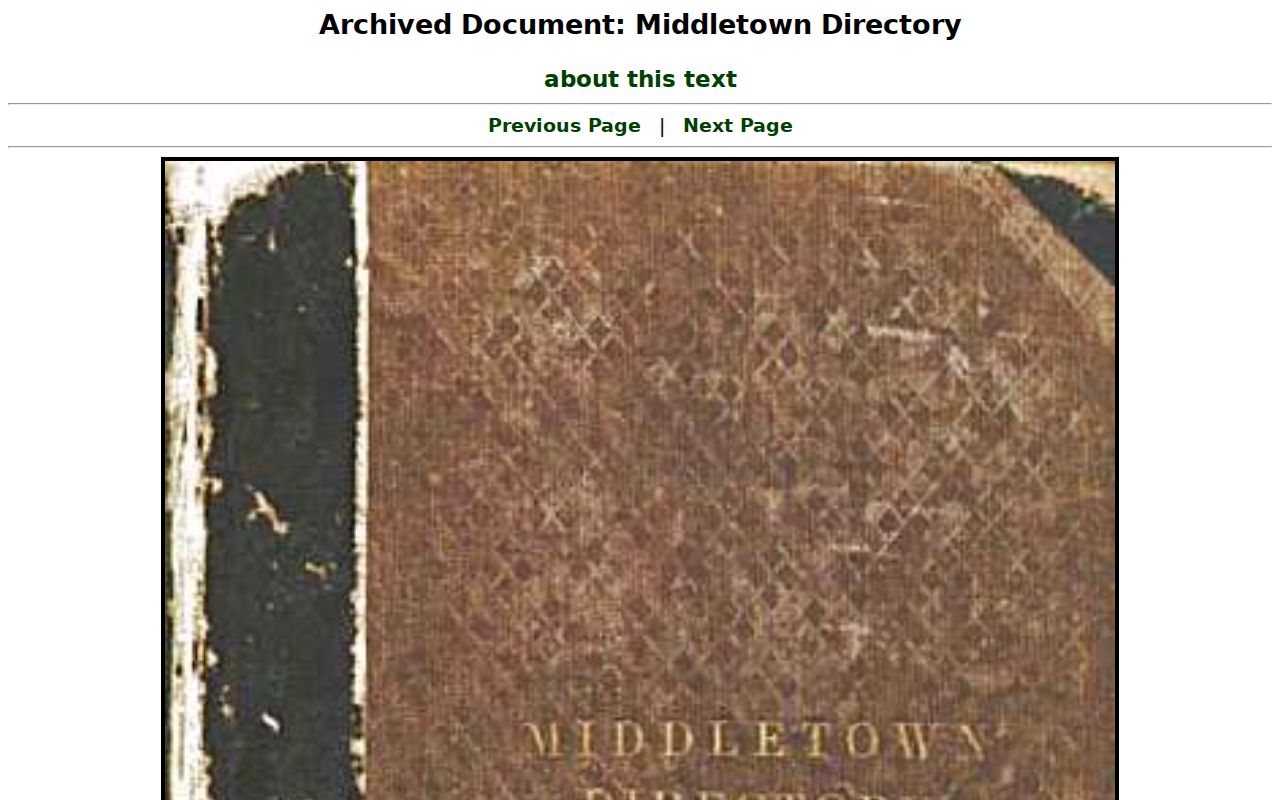
Transcribe only what the image actually shows. Keep the page number beside the transcription. One page can hold a surname, given name, occupation or business context, street or number, a household or role label, advertising text, and cross-references. The fields vary from entry to entry.
| Page number | Lets another researcher reopen the exact image. |
|---|---|
| Name as printed | Preserve initials, spelling, and order before normalizing a search. |
| Address detail | May be a street, number, business location, or another historical location clue. |
| Role or business text | Separates a household reference, advertiser, or institutional entry when the volume makes that clear. |
| Cross-reference | Points to another entry, but still needs a page-by-page check. |
Read Each Middletown City Directory Carefully
A directory entry is evidence of what the publisher chose to print that year. It can tie a name to a historical street, occupation, business, or role. Yet it may omit people. It may also carry an older address, or list a business location rather than a home. Read the heading above the entry. Read the abbreviation key in the same volume too. Never assume a symbol means ownership, marital status, or a reverse lookup. That reading only holds if the volume itself defines it that way.
- Criss-cross directory
- A directory arranged by street or address rather than alphabetically by name. No separate official Middletown run was verified, so check the target volume before using that label.
- Householder index
- An index that identifies a household reference. Its inclusion and meaning depend on the individual volume.
- Abbreviation key
- The printed explanation for shortened terms and symbols. Photograph or transcribe it with the page being used.
A discrepancy is often a clue, not an error. Street spellings shift, village labels change, business entrances get listed, and names get shortened. Keep the original wording in your citation. Then check a second source before deciding two entries name the same person.
Middletown Newspapers Beside the Volumes
Thrall’s newspaper microfilm gives a directory result something the volume alone cannot: a dated context. A name in a city directory can turn into an obituary. It can also surface a business advertisement, a civic notice, or a marriage mention. The confirmed runs are deep. They include the Whig Press from 1851 to 1865, the Middletown Argus from 1876 to 1918, the Daily Press from 1870 to 1901, the Daily Herald from 1919 to 1956, and the Times Herald Record from 1964 forward. One Orange County Times entry carries an apparent date typo, so ask staff what the reel actually covers. Do not trust that printed date.
For obituaries, Thrall’s obituary database provides keyword and advanced search fields. You can search by name, birth or death details, city of residence, maiden or married name, and publication date. The core run covers roughly 1981 through 1988 and keeps expanding backward. One caution applies. A database hit is a pointer, not the obituary itself. So pull the cited newspaper page whenever you can.
Thrall’s historical photo collection rounds out the set. Its captioned houses, businesses, railroad images, and civic places can supply a date and place. Test them against a directory entry.
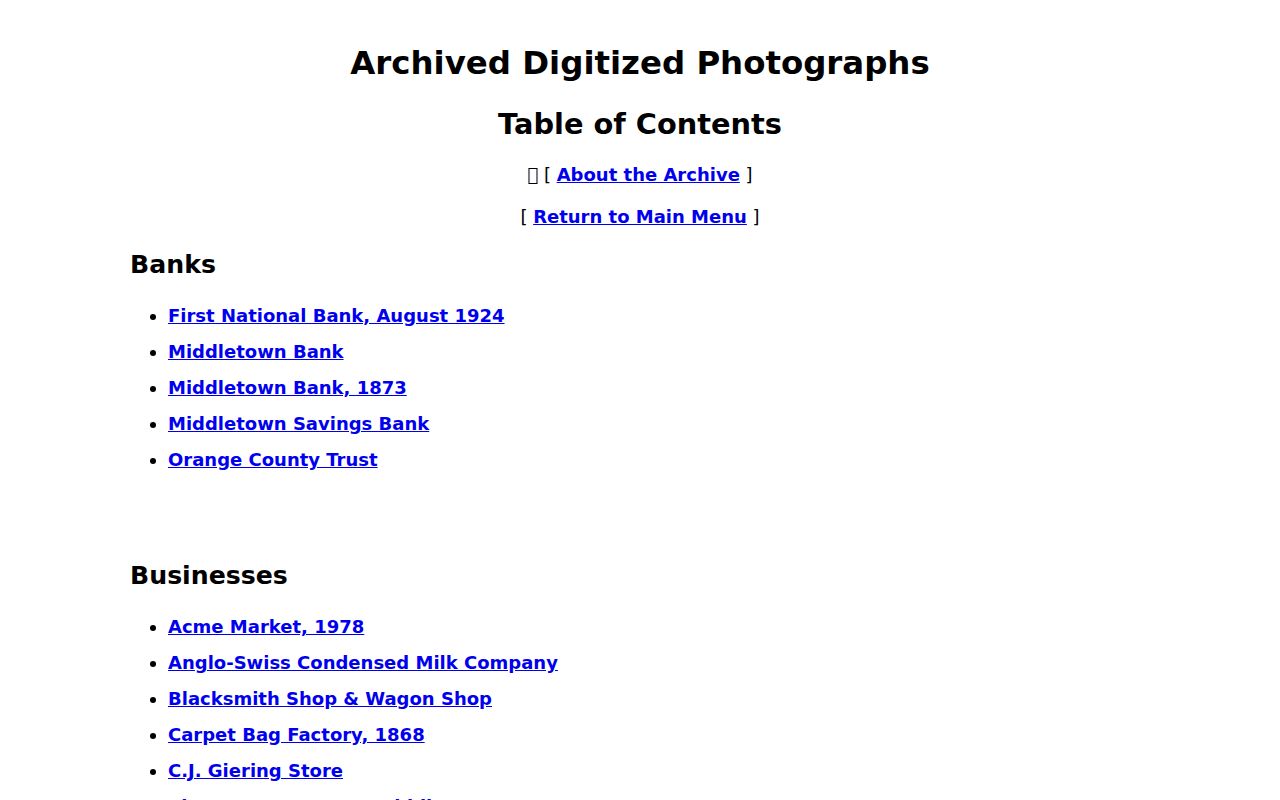
A photo caption is still just a lead. Check its date and location against the matching directory and map records. It should never become a claim about a household living there today.
Middletown Directory Leads Beyond Thrall
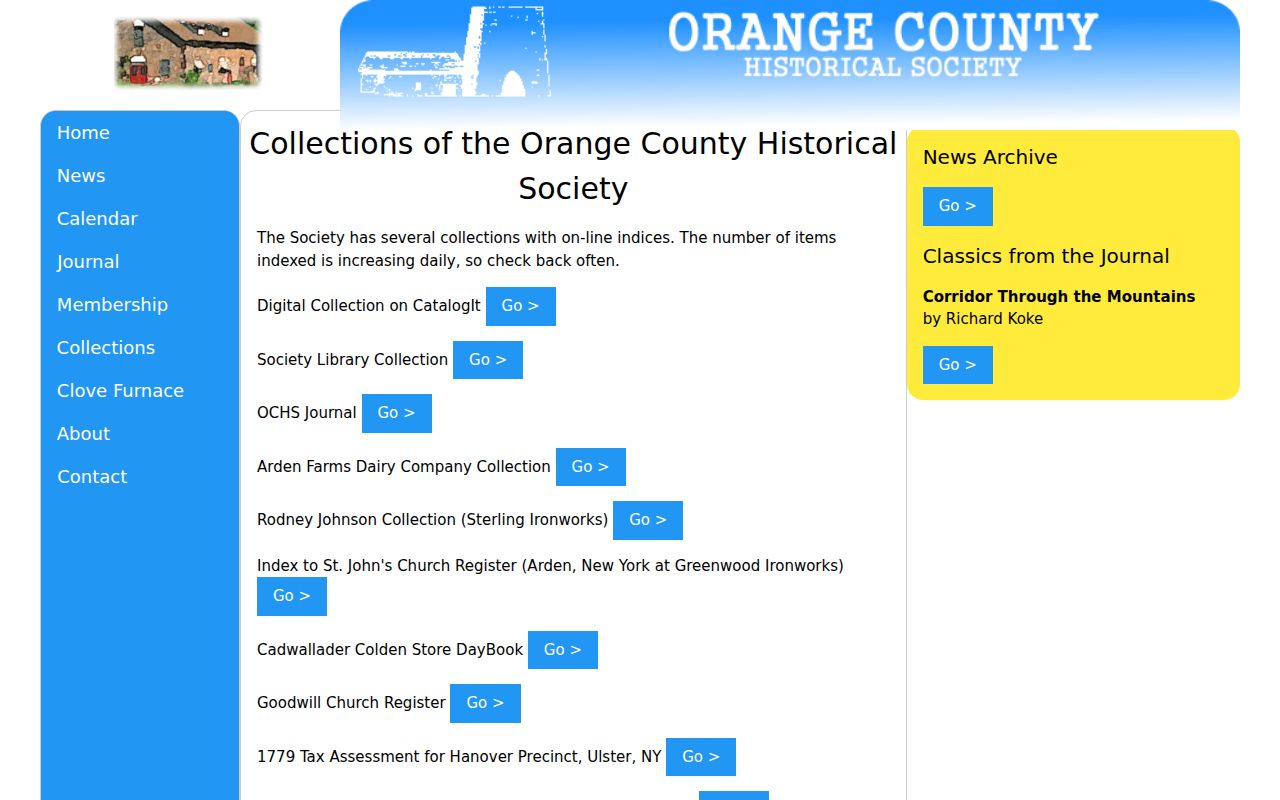
The Orange County Historical Society collections index opens another door. It lists an online catalog, a society library, a journal, church registers, tax assessments, daybooks, maps, and regional documents. The Arden archives work as a county-level supplement rather than a Middletown resident roster. Access goes to members, qualified researchers, or visitors who book an appointment under the society’s terms. When you write, ask for a named collection and a date range. A broad request for a personal profile will not get far. The society’s collection page is the right first stop for institutional records. It also adds county context beyond the residents directory.
The city’s own Historical Sketch adds a Middletown-specific contact. It places the Middletown Historical Society at 25 East Avenue, with public hours on Wednesdays from 1:00 to 4:00. Treat the materials and hours as a local path, and confirm access before you go.
Middletown City Directory Name Variants
Middletown’s changing geography shapes what you should search. The settlement was called South Middletown from 1829 through 1849, according to the city history. The old Minisink Road later became East and West Main Street. Run the historical name beside the modern one in newspapers, directories, maps, and local-history databases. A historical label helps you locate a record. But the source still controls what date and place it proves.
- Write the surname and street exactly as it appears in the first directory result.
- Check the prior and following available directory years, noting any move, business, or spelling change.
- Search the same name and address wording in the relevant Thrall newspaper run or obituary database.
- Try South Middletown and East or West Main variants when the period or road history makes them plausible.
- Keep unresolved address changes as a question for a map, deed description, or library staff member.
Note: A historical street reference needs its publication date, since a later map or directory may apply a different label to the same road.
Middletown Collection Chronology
The local record sequence supplies search terms as well as dates. South Middletown belongs in any early search. The digitized directory marks an early village reference point. Thrall’s later microfilm run then builds a long historical bridge across the decades. The dates describe local names, collections, and library history. They do not promise that every person or street appears in every record.
| 1829-1849 | South Middletown was a historical settlement name worth trying in period newspapers, maps, and address research. |
|---|---|
| 1857-1858 | The digitized Middletown Directory offers page-image access to an early village reference and advertising document. |
| 1871-1984 | Thrall’s confirmed city-directory microfilm holdings provide the strongest long-run local directory trail. |
| 1901 / 1995 | The original Thrall Library building dates to 1901; the current Depot Street library opened in 1995. |
Those reference points also explain why a search changes source types over time. A name first found in the digitized directory should move into newspaper and map material before the later microfilm years take over. Each era favors its own records.
Trace Middletown City Directories by Year
For family history, begin with the city-directory year closest to what you already know. Then move one volume at a time. Record the exact spelling, page, street, and role at every step. Pair the directory with the nearest census year only as a separate household check. The two sources were made for different purposes and dates. A disappearance can mean several things. It may be a move, a death, an omission, or a change in how the volume indexed the person. It is never a conclusion by itself.
- Find the first confirmed Middletown listing and save a page citation or image reference.
- Follow the name through the next available city directories, not just calendar years with no surviving volume.
- Compare a changed address with a newspaper notice, photograph caption, map, or County Clerk instrument.
- Use the nearest census period to test the household composition without treating it as an identical-year record.
- Close the historical trail with a dated obituary, original newspaper item, or eligible vital-record route.
When a directory result needs a modern confirmation, use the separate Middletown resident lookup path rather than stretching a historical listing into the present. The two searches answer different questions. Keep them separate.